Have you ever watched a transaction crawl through a blockchain network and thought, “There has to be a faster way”? You’re not alone. Thousands of developers, investors, and everyday users are asking the same question. Speed, security, and scalability have long been the holy trinity of blockchain challenges. Most projects promise all three. Very few deliver. That’s exactly what makes Etherions Team Faston worth your attention right now.
This isn’t just another whitepaper dream. It’s a working, evolving protocol built by a team that understands the gaps in today’s blockchain landscape and is actively closing them. Let’s dig in.
Who Are the Etherions Team Faston?
Not every blockchain project starts with a clear identity. Etherions Team Faston does. From the very beginning, this group positioned itself not just as developers but as architects of a faster, more accessible decentralized world. Their name alone signals intent: speed is baked into the DNA of everything they build.
They didn’t emerge overnight. The team spent years studying where existing networks stumble, especially under load, during cross-chain interactions, and when enterprise clients demand real-time results. That research shaped their entire approach.
Background and Expertise
The people behind Faston come from remarkably diverse corners of the tech world. You’ve got cryptography veterans who’ve worked on consensus mechanism design, fintech engineers who understand the regulatory side of digital finance innovation, and smart contract auditors who’ve seen every exploit in the book. That combination is rare. Most blockchain teams lean heavily technical and lack practical business sense. This team bridges both.
Their collective background spans decentralized finance platforms, enterprise blockchain adoption, and high-performance network architecture. When they talk about transaction throughput or sharding technology, they’re not guessing. They’ve stress-tested these systems at scale.
Read More: USDT vs USDC: Which Stablecoin Should You Use?
Key Team Members
While specific public profiles may shift as the project evolves, the core leadership demonstrates consistent expertise in multi-layer architecture design, tokenomics, and governance voting systems. The developers leading protocol work have contributed to multiple Layer 2 scaling solutions before joining this venture. Their advisors include voices from regulatory compliance circles and established DeFi ecosystems, lending both technical and legal credibility to the project’s foundation.
What Makes Etherions Team Faston Stand Out?
Unique Features of Faston
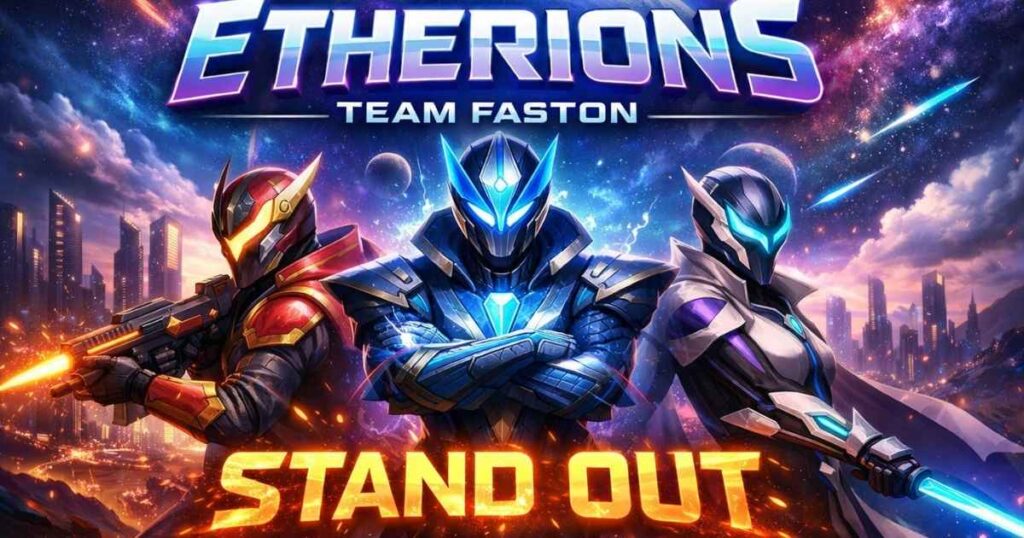
Here’s where things get genuinely interesting. The Faston protocol isn’t a fork of something familiar. It’s built with a hybrid blockchain protocol model that combines the reliability of existing consensus frameworks with proprietary speed optimizations. Think of it as a sports car with all the safety features of a luxury sedan. You don’t have to choose between fast and safe.
Key differentiators include zero-knowledge proofs for privacy-preserving transactions, native cross-chain integration capabilities, and a developer-friendly environment loaded with SDKs and APIs. These aren’t add-ons. They’re structural.
Comparative Analysis with Competitors
Compare Faston to most high-performance blockchain networks and a pattern emerges. Competitors often sacrifice decentralization for speed, or they bolt on interoperability as an afterthought. Faston builds interoperability into the base layer. That’s a fundamental architectural difference.
Other networks struggle with blockchain scalability solutions as user bases grow. Faston’s sharding technology allows the network to distribute load dynamically, meaning performance stays consistent whether there are 100 users or 100,000.
Speed and Efficiency Advantages
Numbers tell part of the story. Fast transaction processing is a stated goal for many projects. For Faston, it’s a measurable outcome baked into protocol design. By combining sharding, optimized Proof of Stake consensus, and a multi-layer architecture, the network achieves transaction throughput figures that competing chains can’t match at equivalent decentralization levels. You get speed. You don’t sacrifice trustlessness to get it.
The Vision Behind Etherions Team Faston
Long-Term Goals
Short-term hype doesn’t interest this team. Their long-term goals center on building infrastructure that enterprises and individual developers can rely on for the next decade. They’re targeting real-world utility over speculative noise. That means healthcare data, supply chains, financial services, and identity verification on blockchain, not just trading activity.
Focus on Innovation and Scalability
Innovation without scalability is just a prototype. Faston’s architecture was designed with growth in mind from day one. As decentralized applications (dApps) multiply and demand increases, the network expands to meet that demand without degrading user experience. That’s not a marketing claim. It’s an engineering principle embedded in how the protocol handles node distribution and block validation.
A New Era for Blockchain Technology
We’re at an inflection point in blockchain technology trends. The first generation built foundations. The second proved concepts. Now we need infrastructure that works at civilizational scale. Etherions Team Faston is building for that third wave, one where blockchain isn’t a niche curiosity but a standard layer of global digital infrastructure.
The Faston Protocol: How It Works
Technical Overview
At its core, the Faston protocol is a hybrid blockchain framework combining elements of Proof of Stake consensus with a proprietary validation layer that accelerates finality. Traditional networks finalize blocks in seconds to minutes. Faston targets near-instant finality by restructuring how validators communicate and confirm transactions.
The architecture supports both public and permissioned chains, making it suitable for enterprise blockchain adoption alongside fully open decentralized applications.
Key Mechanisms and Protocol Features
Several mechanisms drive Faston’s performance. Sharding technology splits the network into parallel processing lanes, each handling a subset of transactions simultaneously. Zero-knowledge proofs allow sensitive data to be verified without exposure, a critical feature for healthcare and finance applications. Smart contracts security is addressed through a built-in audit layer that flags vulnerability patterns before deployment.
The FAST token underpins governance voting, staking rewards, and transaction fee structures, creating a tightly integrated economic system.
Layered Structure and Interoperability
Faston uses a three-tier layered structure. The base layer handles consensus and security. The middle layer manages smart contract execution and dApp deployment. The application layer interfaces with external systems through interoperable networks and cross-chain bridges. This design means developers can build on Faston without abandoning tools they already use on other chains.
Security and Anonymity Prioritized
Cryptographic Measures
Security audits happen regularly and are transparent to the community. The cryptography and encryption methods employed go beyond standard elliptic curve implementations. Faston incorporates post-quantum resistant cryptographic primitives in its roadmap, acknowledging that today’s secure methods need to evolve alongside computing power.
Validator nodes undergo rigorous onboarding checks, reducing the surface area for collusion or Sybil attacks. The network’s consensus rules make it economically irrational to attack.
Privacy Features and Benefits
Privacy isn’t optional here. Every user benefits from privacy features built into the base protocol. Zero-knowledge proofs allow transaction verification without revealing amounts or parties involved. For DeFi platforms processing sensitive financial data, this matters enormously. For enterprises handling patient records or proprietary logistics data, it’s non-negotiable.
Ensuring User Safety in Decentralized Systems
Decentralized systems come with unique risks. Smart contract bugs, phishing, and oracle manipulation are real threats. Faston addresses these through a combination of formal verification tools for contract code, community-reviewed upgrade proposals, and real-time monitoring dashboards. Users aren’t left to fend for themselves. The protocol actively protects them.
Community and Ecosystem Growth
The Importance of Community Engagement
A protocol is only as strong as the people behind it. Etherions Team Faston understands this deeply. Community-driven governance isn’t a slogan here. It’s the actual decision-making structure. Token holders vote on protocol upgrades, fee adjustments, and ecosystem fund allocations. Your voice carries weight.
Strategies for Ecosystem Expansion
Ecosystem growth follows a deliberate strategy. Developer grants attract builders. Hackathons surface talent. Educational content lowers the barrier for new participants. By investing in developer SDKs and APIs alongside robust documentation, Faston creates the conditions for organic ecosystem expansion rather than forcing artificial growth.
Community Incentives and Rewards
Staking rewards give long-term holders a reason to stay engaged. Liquidity mining programs deepen DeFi activity on the network. Community contributors, whether coders, content creators, or governance participants, earn recognition and compensation through structured reward pools tied to the FAST token.
Real-World Use Cases Powered by Etherions Team Faston
DeFi and Financial Applications
Decentralized finance (DeFi) platforms built on Faston benefit from its low latency and high-throughput environment. Lending protocols, decentralized exchanges, and yield optimization tools all perform better when the underlying chain doesn’t bottleneck under load. Real-time blockchain updates keep pricing oracles accurate, reducing arbitrage risk and improving market efficiency.
Supply Chain Management
Supply chain blockchain solutions require absolute data integrity and fast verification across multiple parties. Faston’s architecture handles this natively. Goods moving from manufacturer to retailer leave an immutable audit trail. Disputes resolve faster. Fraud becomes exponentially harder to execute.
Healthcare and Identity Verification
Patient data is among the most sensitive information in existence. Identity verification on blockchain using zero-knowledge proofs means a hospital can confirm a patient’s history without exposing the entire record. Insurance companies verify eligibility without accessing full medical files. It’s a paradigm shift for data privacy in healthcare.
Gaming and NFTs
NFT gaming transactions demand speed above almost everything else. When you’re mid-battle and need to mint, transfer, or verify an in-game asset, latency ruins the experience. Faston’s transaction speed makes real-time asset exchanges possible within gaming environments without sacrificing ownership verification. It’s the infrastructure that game developers have actually been waiting for.
Partnerships and Collaborations
Key Industry Partnerships
Strong partnerships validate a project’s real-world relevance. Etherions Team Faston has cultivated relationships with enterprise technology firms, DeFi protocols, and blockchain interoperability projects. These aren’t logo arrangements. They’re functional integrations that bring mutual benefit and expand the network’s reach into new industries.
Strategic Collaborations for Growth
Strategic collaborations with regulatory bodies and legal technology firms position Faston ahead of compliance demands rather than scrambling to catch up. By engaging with frameworks governing digital assets in key markets, the team ensures that enterprise clients can adopt the protocol without legal uncertainty clouding their due diligence.
Future Partnership Opportunities
The roadmap points toward deeper integrations with real-world asset tokenization platforms, central bank digital currency (CBDC) research groups, and identity management solutions. Each partnership opens new use cases and broadens the decentralized ecosystem the team is building.
Tokenomics and Investment Opportunities
Token Distribution Model
The FAST token distribution model reflects a commitment to decentralization. A meaningful allocation goes to community development, ecosystem grants, and liquidity provisioning. Team and advisor allocations include standard vesting schedules, aligning long-term incentives with project success. There’s no disproportionate concentration that would give insiders undue control over governance voting outcomes.
Value Proposition for Investors
For investors, the value proposition rests on utility rather than speculation. FAST tokens power staking rewards, transaction fees, and governance participation. As network usage grows, demand for the token increases organically. That’s a fundamentally different dynamic than tokens that exist purely for fundraising.
Market Trends and Price Predictions
Blockchain technology trends point toward increased institutional interest in high-performance networks. As enterprise blockchain adoption accelerates and DeFi matures, networks that offer speed, security, and compliance readiness will attract sustained capital. Faston sits squarely in that intersection. While price predictions carry inherent uncertainty, the structural demand drivers are solid.
Roadmap: Where Etherions Team Faston Is Headed
Upcoming Milestones and Deliverables
Near-term milestones include mainnet performance upgrades, expanded developer documentation, and new cross-chain integration modules. Security audit results from third-party firms will be published as they complete, maintaining the transparency that community members expect.
Vision for the Next 5 Years
Five years from now, the team envisions Faston as a foundational layer for real-world asset tokenization, enterprise data management, and global DeFi infrastructure. The goal isn’t to be the biggest chain by market cap. It’s to be the most relied upon by builders who need dependable performance under real conditions.
Key Challenges and Solutions
Scaling without sacrificing decentralization remains the industry’s hardest problem. Faston’s answer is continuous sharding refinement and a modular architecture that allows components to be upgraded independently. Regulatory challenges are addressed through proactive engagement rather than avoidance. The team treats compliance as a feature, not a constraint.
How to Join the Etherions Team Faston Community
Registration and Onboarding Process
Getting started is straightforward. You can create a wallet compatible with the Faston network, acquire FAST tokens through supported exchanges, and begin participating in staking or governance immediately. The onboarding documentation walks through each step clearly, even if you’re new to blockchain.
Joining the Community via Social Channels
Active communities live on Discord, Telegram, and Twitter (now X). These aren’t ghost towns. Regular updates, AMAs with core team members, and proposal discussions keep engagement alive. Following official channels gives you real-time blockchain updates on protocol changes, partnership announcements, and governance votes.
Engaging with Other Community Members
The best way to understand a project’s health is to spend time in its community. Ask questions. Propose ideas. Review governance proposals and vote on outcomes. Etherions Team Faston actively encourages this participation because a more engaged community makes better decisions for the protocol’s long-term trajectory.
Advanced Governance and Decentralized Decision-Making
DAO Integration
DAO integration transforms passive token holders into active stakeholders. Faston’s governance model uses a decentralized autonomous organization structure where proposals can be submitted by any FAST holder meeting a minimum threshold. This prevents governance capture by large players while keeping the process orderly.
Community Voting Systems
Voting systems are weighted by token stake but include delegation mechanisms, meaning smaller holders can assign their vote to trusted representatives. This balances broad participation with informed decision-making. It’s a thoughtful design, not just a checkbox.
Transparency in Decision-Making
Every proposal, vote, and outcome is recorded on-chain. Nothing disappears. No decisions happen in back rooms. If you want to audit six months of governance history, you can. That level of transparency in decision-making builds the kind of trust that brings serious enterprises and developers to a protocol.
Developer Tools and SDK Support
Faston Developer Kits and APIs
Developers get a comprehensive toolkit. The Faston SDKs cover the most common programming languages used in blockchain development. APIs expose core protocol functions cleanly, reducing the boilerplate developers typically wrestle with. If you’ve built on Ethereum or Solana before, the transition to Faston is smoother than you might expect.
Tutorials and Documentation for Developers
Documentation quality often predicts ecosystem growth better than marketing spend. Faston invests heavily in tutorials, code samples, and guided walkthroughs. Whether you’re deploying your first smart contract or building a complex multi-chain application, the docs have you covered.
Building on the Faston Protocol
Building on Faston means accessing native speed, built-in privacy features, and cross-chain compatibility from day one. You don’t need third-party bridges or workarounds. The protocol supports your ambitions at the infrastructure level, giving you more time to focus on what your application actually does for users.
Regulatory Readiness and Compliance Tools
Navigating Blockchain Regulations
Regulatory compliance isn’t the enemy of decentralization. It’s the condition for mainstream adoption. Faston approaches regulations by building tools that make compliance straightforward rather than burdensome. Know-your-customer modules, transaction monitoring capabilities, and reporting frameworks are available as optional layers enterprises can activate without compromising the base protocol’s openness.
Compliance Features for Enterprises
Enterprise blockchain adoption depends on auditability, data residency options, and regulatory reporting. Faston provides all three through configurable compliance modules. Whether you’re a financial institution in Europe navigating MiCA regulations or a healthcare provider in the US managing HIPAA requirements, the protocol gives you tools to comply without custom engineering.
Legal Frameworks and Global Standards
The team actively monitors evolving global standards for digital assets. Engagement with international working groups and regulatory sandbox programs ensures Faston stays ahead of legal developments rather than reacting to them. That proactive stance is exactly what enterprise clients need before committing to a platform long term.
Integration With Real-World Assets (RWA)
Connecting Digital Assets with Tangible Goods
Real-world asset tokenization bridges the physical and digital economies. Faston makes this practical by providing the speed and verification infrastructure that RWA platforms require. A tokenized property, a fractional share of a commodity, or a digitized bond all need a reliable settlement layer. Faston provides one.
Use Cases for RWA Integration
The use cases are broad. Real estate tokenization allows fractional ownership without traditional broker intermediaries. Art and collectibles gain verifiable provenance records. Commodities like gold or agricultural products become tradeable in digital form with fully auditable ownership histories. Each of these scenarios benefits from Faston’s combination of speed, security, and interoperability.
Benefits of Real-World Asset Tokenization
For investors, RWA tokenization unlocks asset classes previously accessible only to institutional players. For businesses, it streamlines settlement and reduces counterparty risk. For regulators, the on-chain audit trail makes oversight more effective and less resource-intensive. Everyone benefits when the technology actually works at the required speed and scale.
FAQ’s
What is Etherions Team Faston and what does it do?
Etherions Team Faston is a blockchain development team building a high-speed, scalable protocol focused on fast transaction processing, security, and interoperability for both enterprise and decentralized applications.
What is the FAST token used for?
The FAST token powers staking rewards, governance voting, and transaction fees within the Faston ecosystem, creating direct utility tied to network activity.
How does Faston achieve faster transaction speeds than competitors?
Faston combines sharding technology, optimized Proof of Stake consensus, and a multi-layer architecture to achieve high transaction throughput without sacrificing decentralization.
Is Faston suitable for enterprise blockchain adoption?
Yes. Faston includes configurable compliance modules, privacy features, and developer SDKs that make it practical for enterprises navigating regulatory requirements while building on decentralized infrastructure.
How can someone participate in Faston governance?
Any FAST token holder can submit or vote on governance proposals through the DAO integration structure, with delegation options available for smaller holders who prefer to assign voting weight to trusted representatives.

Cole Maddox is a digital strategist and crypto content expert with over 7 years of experience in blockchain marketing and SEO. He specializes in creating data-driven content that builds trust and authority in the crypto space. Cole’s insights have helped startups grow organic reach through premium backlinks and high-quality guest posting strategies aligned with Google’s EEAT standards.